Southern Florida Wetland
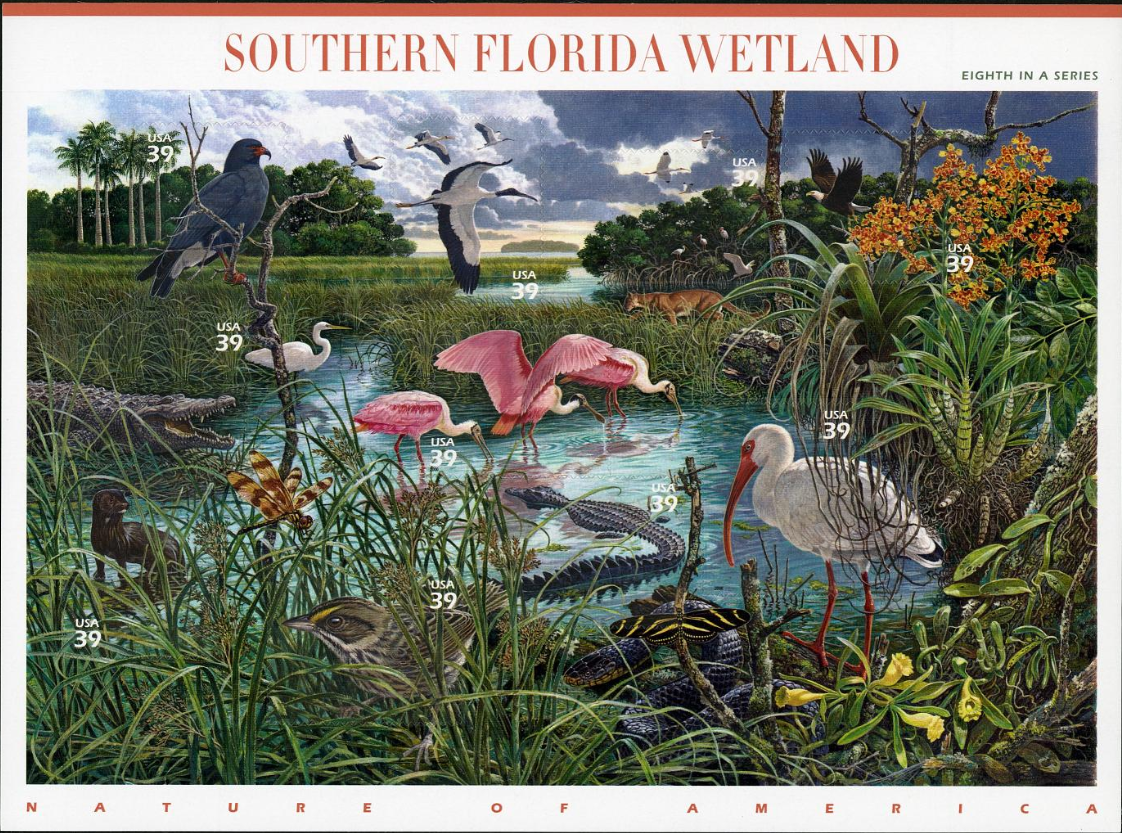
The subtropical wetlands of southern Florida are remnants of a great wilderness that stretched, unbroken, for hundreds of miles until about a century ago. They still include some of the most extensive saw grass marshes and mangrove swamps in the world-wetlands that support a remarkable number of species.
In southern Florida, plants and animals are well adapted to water-level changes that correspond to alternating wet and dry seasons. Although some species require freshwater habitats, others are more salt tolerant. This stamp pane depicts a wetland community where freshwater mingles with salt water along the coast, and thus the art includes both freshwater and coastal species.
Much of southern Florida's natural wealth is protected in Everglades National Park, a 1.5-million-acre preserve noted for its vast marshes and mangrove swamps. The park's wetlands are home to hundreds of bird species and such rare creatures as the Florida panther and Everglades mink. Its wetlands are also havens for the elusive American crocodile and the more common American alligator – such as the youngster eyeing spoonbills at the center of the scene.